
High income earners face a different set of life insurance planning challenges than most people. The question is rarely whether you can afford coverage, it is whether the coverage you have is actually designed for the complexity of your financial life. For many of my clients, the answer when we first sit down is no.
I am Elizabeth Kusmider, CFP®, and I work with business owners and high income individuals to design life insurance strategies that fit their full financial picture, not just their income. Here is what permanent life insurance can and cannot do for someone in your position, and how to think about whether it belongs in your plan.
High income creates complexity. It typically comes with a more sophisticated investment portfolio, business ownership or equity stakes, real estate, significant retirement account balances, and an estate that may require planning to transfer efficiently. Each of these creates either an insurance need or an insurance planning opportunity, sometimes both.
The clients I work with are not buying life insurance to replace a paycheck. They are using it to solve specific planning problems: providing liquidity in an estate that is heavy with illiquid assets, funding a succession agreement, supporting a legacy strategy, or creating tax advantaged growth that complements their other investments. To explore how different policies fit into your overall plan, you can read more about Small Business Insurance Needs: Which Coverage is Best? | ERGO NEXT .
Unlike term coverage, permanent life insurance guarantees a death benefit regardless of when you die, whether at 60 or 90. For high income earners with estate planning goals, that certainty is the foundation of strategies that depend on a death benefit arriving at a specific time.
The cash value inside a permanent policy grows tax deferred. For someone who has already maxed out their 401k, IRA, and other tax advantaged vehicles, a properly structured permanent policy can serve as an additional bucket of tax deferred growth.
That cash value can be accessed through policy loans, which are generally not treated as taxable income, during your lifetime. This is one of the reasons high income earners and business owners find permanent coverage valuable as part of a broader financial strategy.
Estates heavy with illiquid assets, such as a closely held business, real estate, art, or private equity, can face a liquidity problem at death. Estate taxes and settlement costs are due in cash, but the estate's assets may not be easily converted. A life insurance death benefit provides that liquidity without forcing a distressed sale. You can consult official government resources on how to Get business insurance | U.S. Small Business Administration to understand foundational protections.
When held in an irrevocable life insurance trust (ILIT), the death benefit can be structured to fall outside the taxable estate, meaning the full proceeds are available to pay estate costs without being subject to estate tax themselves. For family run enterprises, these risks often overlap with personal family dynamics, which you can explore further in our guide on Family Owned Business Insurance.
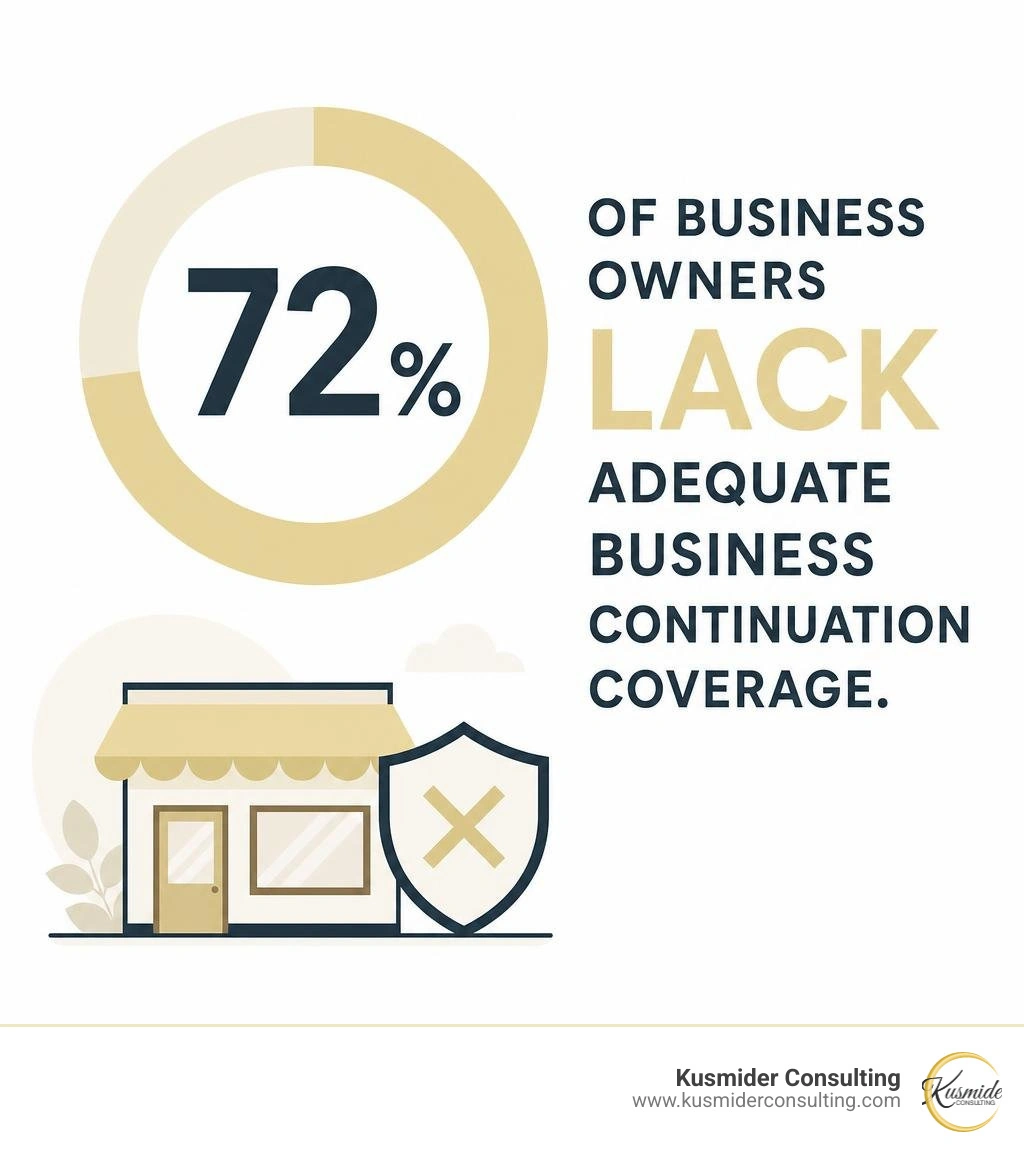
To understand how to structure these protections, see What is Key Person Insurance and explore Our Services.
Permanent life insurance is often sold with projections that assume favorable conditions over decades. I am direct with my clients about this: illustrations are not guarantees. A policy that is designed at the minimum premium with aggressive growth assumptions can underperform significantly, and in the worst cases, lapse, if those assumptions do not hold.
Proper design means funding the policy adequately, selecting a financially strong carrier, and building in regular review so that the coverage continues to perform as intended. Ongoing oversight is part of what I provide, because a policy that is placed and forgotten is a policy that is at risk.
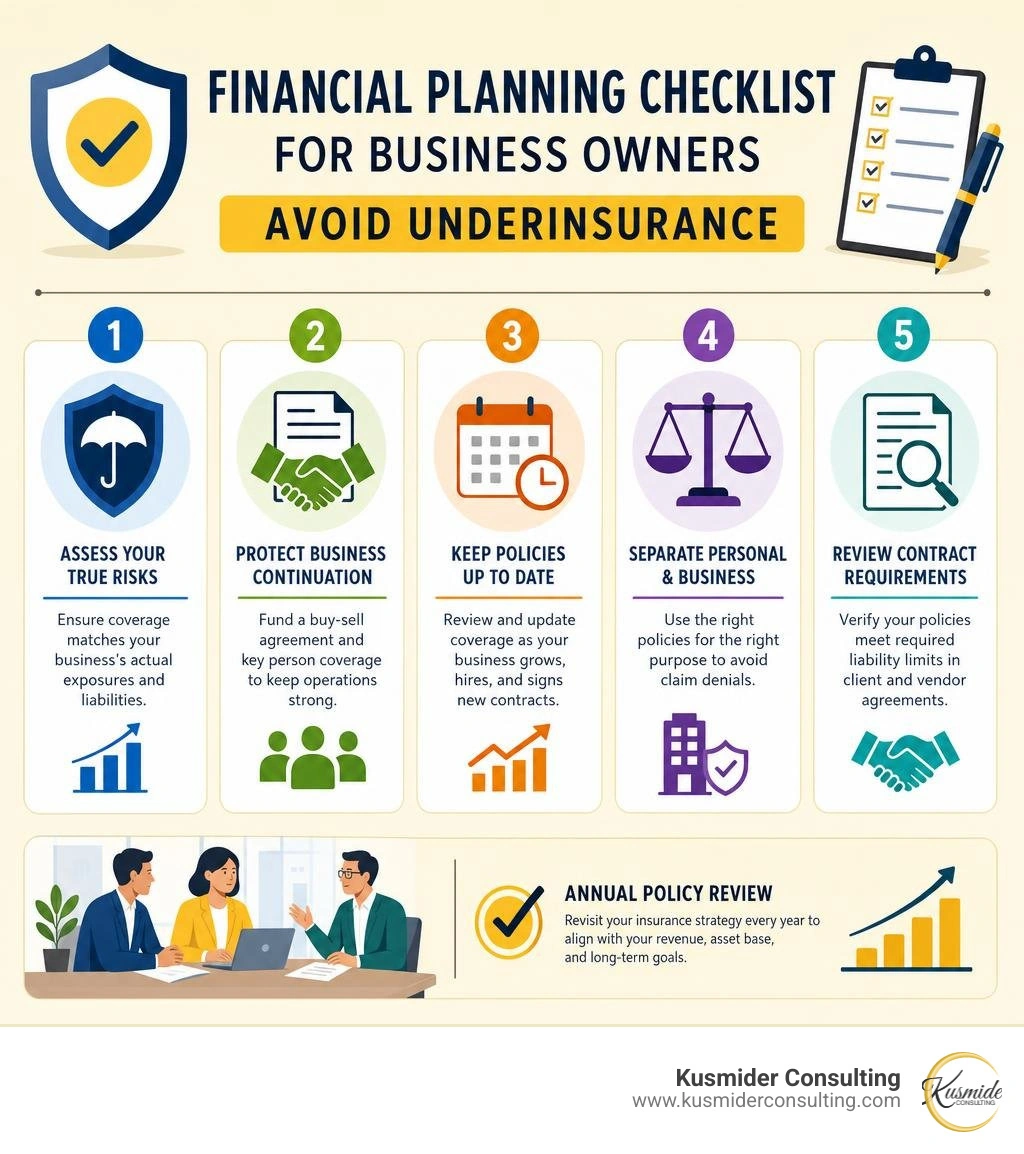
The right coverage for a high income earner depends on specifics I cannot assess in a blog post: your estate size, your business structure, your family situation, your existing investments, and your planning goals. What I can say is that for most of the clients I work with at this income level, permanent life insurance is not just a protection product, it is a planning tool.
If you have complex planning needs and you are not sure whether your current coverage is doing enough work, a planning conversation is the right next step. We also collaborate with professional partners, which you can read about For Advisors.
Elizabeth works closely with wealth managers and estate attorneys to bring insurance planning into broader client conversations. We are here to help make that process simple, not stressful. To schedule a planning session or discuss a client situation, reach out to Elizabeth Kusmider, CFP® at info@kusmiderconsulting.com.
You can learn more about our philosophy and approach by exploring Our Services.
As a full-service, independent brokerage based in Houston, Texas and available throughout the U.S., we specialize in aligning insurance solutions with broader financial strategies. We provide expert guidance, unbiased product recommendations, and ongoing policy oversight to ensure your coverage evolves with your needs.
Whether you're reviewing your own protection or advising clients, we’re committed to helping you make informed, confident decisions.

Elizabeth founded Kusmider Consulting with a simple goal: help people make informed insurance decisions without confusion or pressure.
As a Certified Financial Planner™, she brings a planning background to insurance work, focusing on how coverage fits into the broader financial picture, not just policy features.
If you’d like to discuss how a topic applies to your personal or professional situation, we’re happy to talk.
Schedule a Planning callLife insurance planning for people who want clarity, structure, and long-term oversight.

Securities offered through Simplicity Investments, Member FINRA/SIPC; 475 Springfield Ave, Summit, NJ 07901 (303) 797-9080. Kusmider Consulting is not affiliated with Simplicity Investments.
The Leaders Group, Inc. Customer Relationship Policy
Broker Check by FINRA .